Video
Video surveillance on the cameras you already own, whoever made them, with the analytics running inside your plant.
- Live video
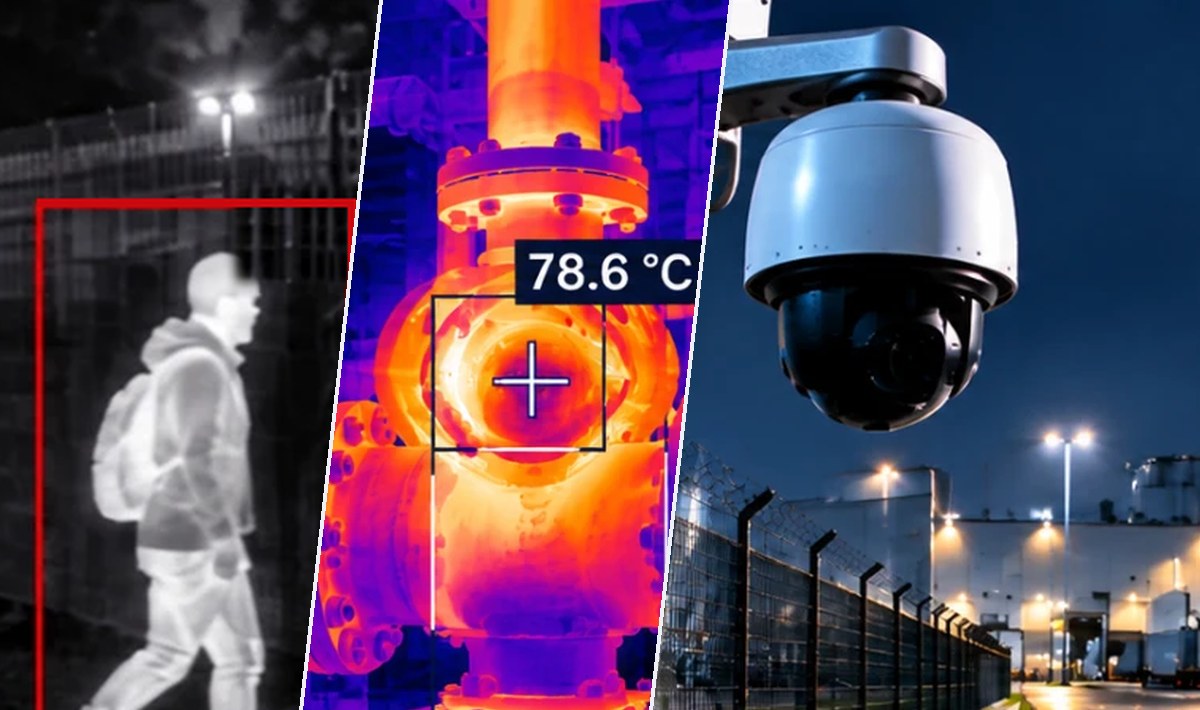
- Thermal, built in
- People detection
- Search by description
Illustrative scenes. The system's own readings are further down.
Why it matters
A video system tied to one manufacturer turns every expansion into a negotiation with them. When the model you need is another brand, or the price goes up, or that part number is simply discontinued, the problem is yours and the solution is theirs.
How it works
- 01
Network discovery over ONVIF, with guided onboarding and deduplication by MAC and serial number: a camera with two addresses is not added twice.
- 02
A hardware abstraction layer translates every brand into one language. Drivers pass a functional conformance harness before they count as certified.
- 03
Cameras classify themselves by make, model and resolution: fixed, PTZ, thermal or fisheye. A PTZ never shows up as fixed, which is where half of all impossible configurations come from.
- 04
H.265 and WebRTC for the wall; sub-stream for grid views. The heavy stream is only requested when someone is actually watching.
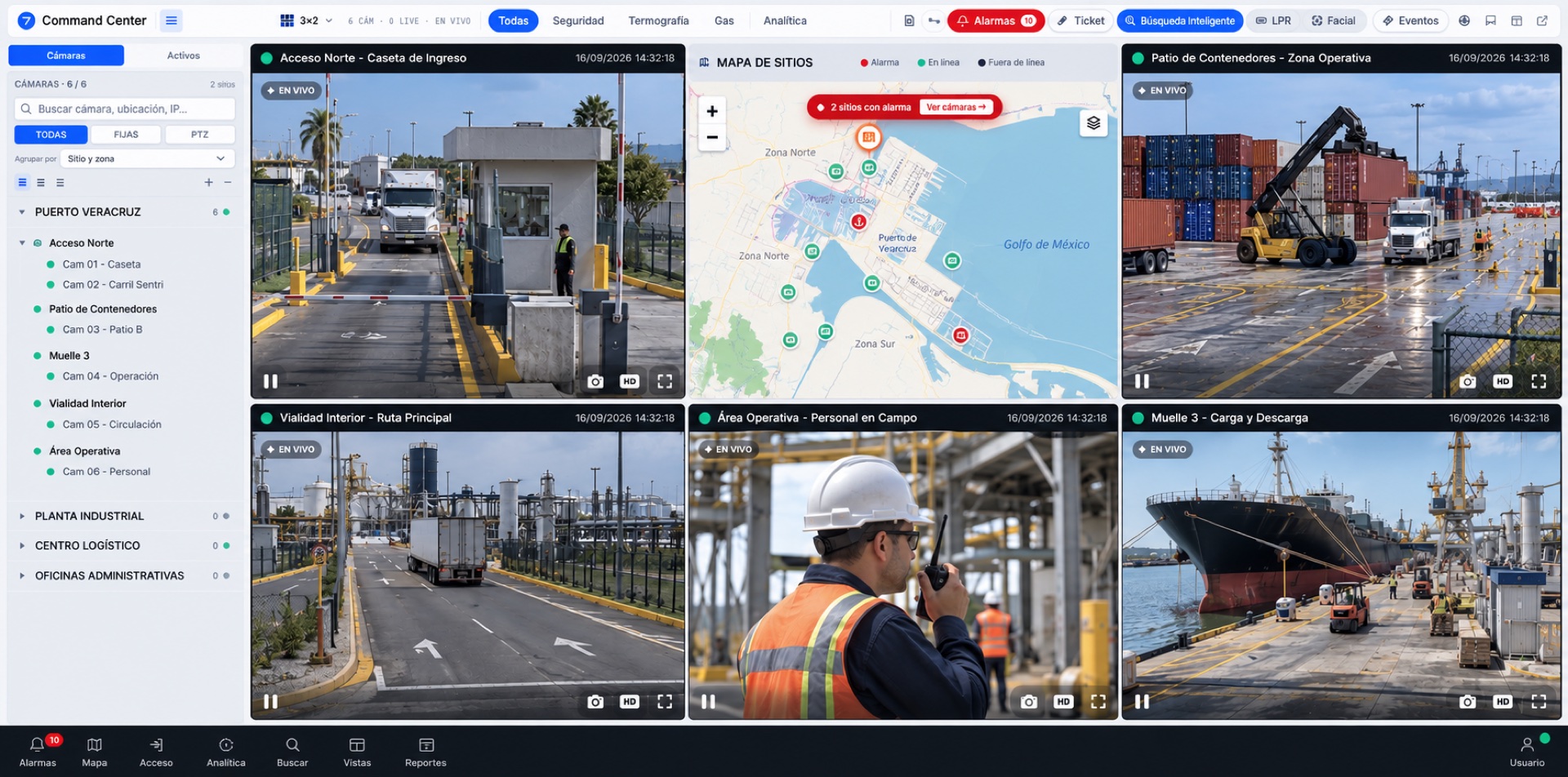
Live video
The wall draws what the cameras see right now. H.265 and WebRTC, with a sub-stream in the grids: the heavy stream is only requested when somebody is actually watching.
Thermal, built in
The thermal camera joins the same wall as the rest, and its reading is a measurement in degrees, not a pretty colour. No second program needed to see it.
People detection
The engine runs inside the plant. The image never leaves the site to be analysed by someone else, which is why it keeps working when the link is down.
Search by description
You type what you are looking for —colour, vehicle type, plate— and the moment comes back with its camera and its time. No file name, no exact hour needed.
The screens themselves
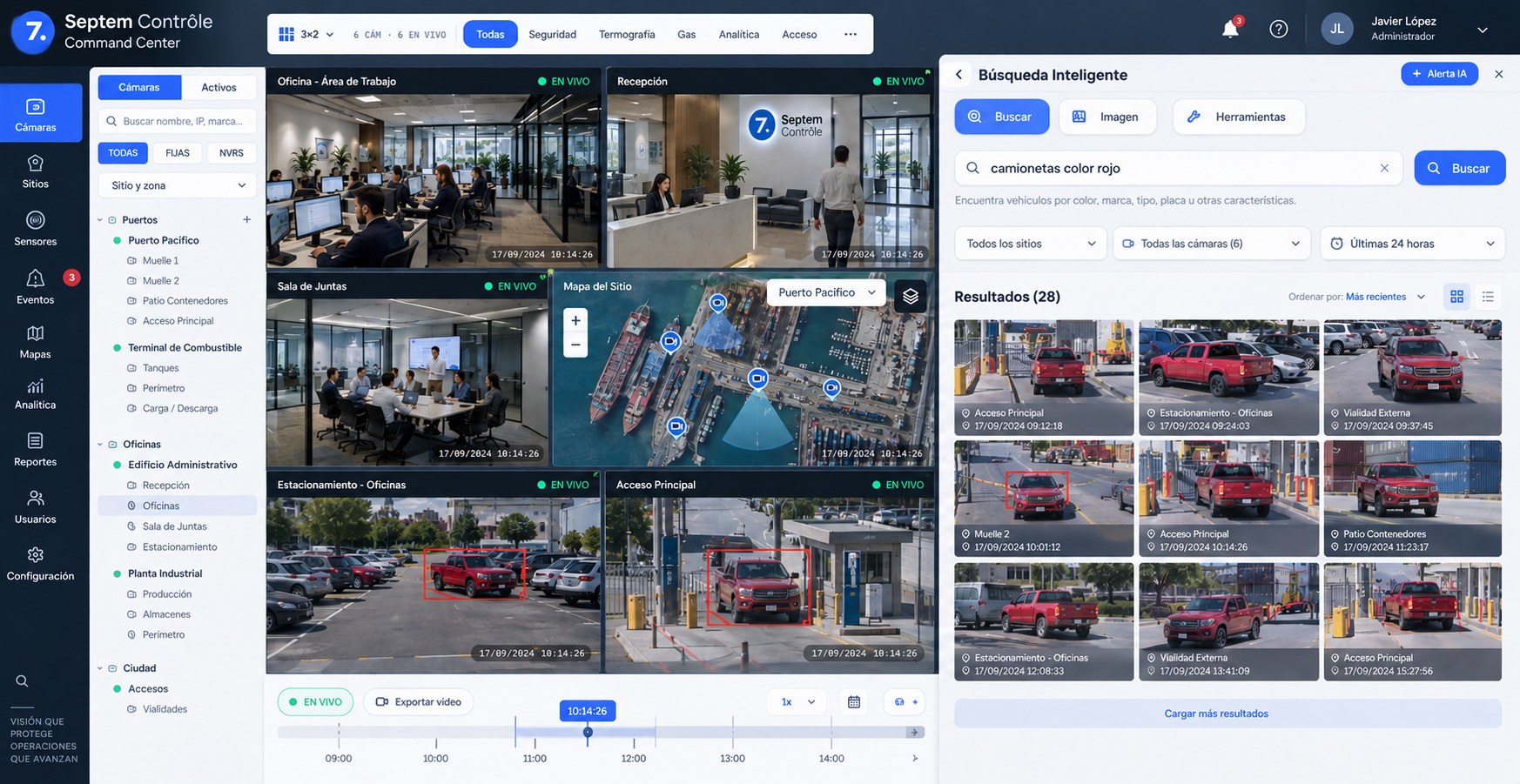
Command Center · Smart searchSearch by description, not by file name. You type what you are looking for —colour, type, make, plate— and the system returns the moments, each with its camera and its time, to jump straight to the video. Representation: the sites and scenes are examples.
1 / 1
In practice
When the link goes down
Recording lives at the edge, inside the plant. If the internet is cut, it keeps recording. When the network returns, the video left on the camera's card uploads itself to the server and the gap closes without anyone asking.
Capabilities
- ONVIF and RTSP · thirteen certified drivers and counting
- H.265, WebRTC, and MJPEG as a last resort
- 360° fisheye dewarp
- Automatic backfill from the camera's card once the network returns
- Real detection of a dead camera, not just of registration
- View-only screens with no sign-in, for kiosk displays
- Phone or tablet as a camera