Thermal imaging
Real temperature measurement, read from the hardware, for predictive maintenance, process control and perimeter.
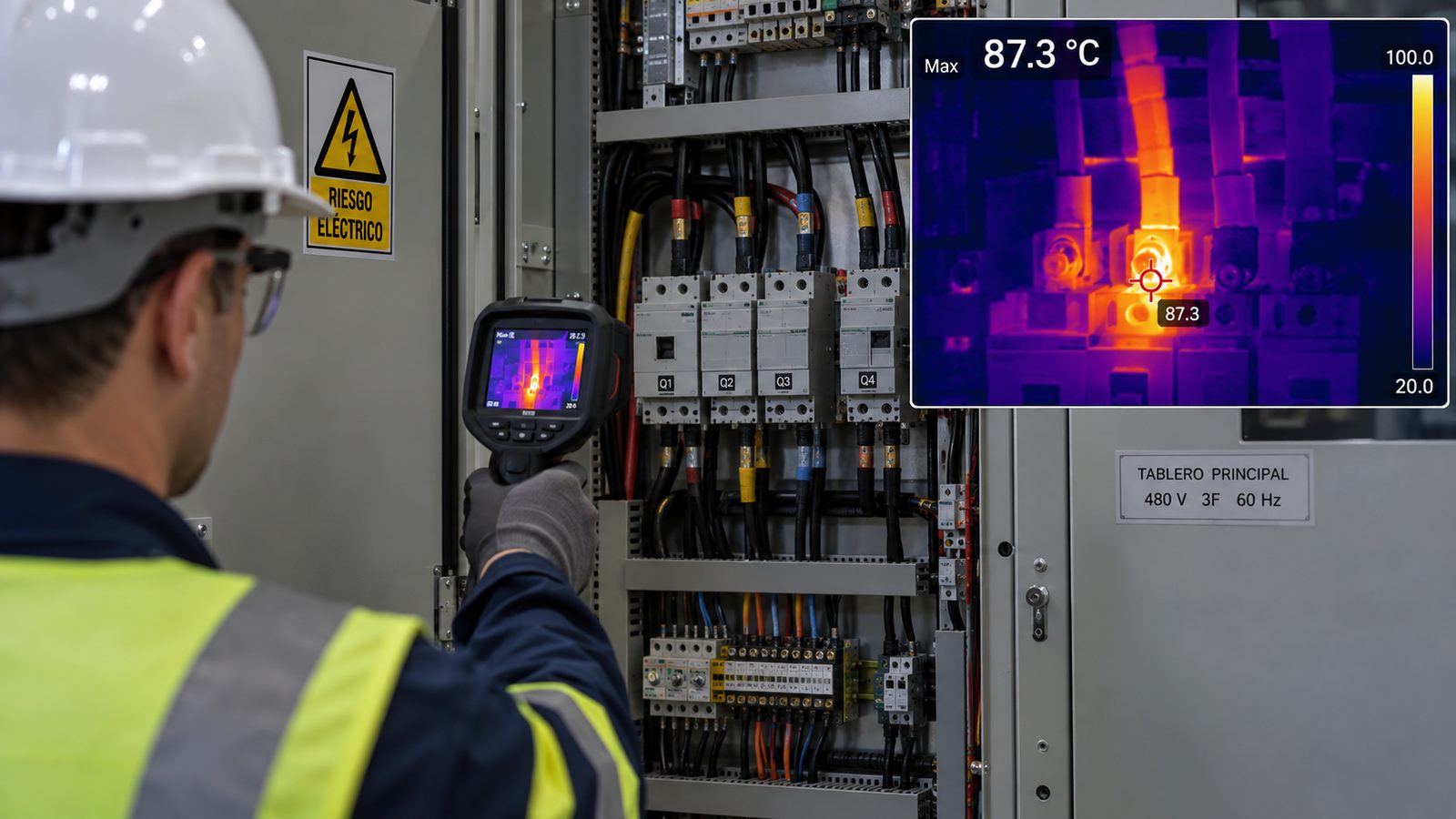
Degrees come from the sensor
The number comes from the camera's radiometric sensor, never from a model estimating it by looking at the image. If the model does not measure, there is no temperature here.
Several points per camera
One camera watches several measurement points at once, each with its own threshold, its standard and its history.
A health index, not a colour
Four weighted sub-signals in a number from 0 to 100 across seven bands. The worst component governs: equipment does not fail on average.
Process mode
Furnaces, boilers and chillers are judged by setpoint adherence and uniformity across zones, not by being hot.
Why it matters
Most of what is sold as “thermal” colours an image and calls it measurement. The difference shows up the day you have to justify a shutdown: a colour defends nothing, a degree with its standard behind it does.
How it works
- 01
Degrees come from the camera's sensor, never from a model estimating them by looking at the picture. If a model does not measure, the platform does not treat it as thermal.
- 02
One camera watches several measurement points at once, each with its own threshold and history.
- 03
The Thermal Health Index weighs four sub-signals — absolute temperature, ΔT over the reference, trend and irregularity — into a number from 0 to 100 and seven bands. The worst component governs: one point below 50 pulls the whole down.
- 04
Process mode for furnaces, boilers and chillers: setpoint adherence and uniformity, not just the maximum.
In practice
A tank you cannot measure with a ruler
The thermal line marks where the liquid sits, but percentage of height is not percentage of volume. A horizontal cylinder resolves as a circular segment, a sphere as 3f²−2f³. From that come litres, remaining capacity and reorder point — not a percentage that misleads.
Capabilities
- NETA ΔT classes over baseline · class 1 above 35 °C
- Seven health bands with worst-component governor
- IEC 60034 · NETA MTS 100.18 · ISO 18434-1 · NFPA 70B · ISO 20816
- Geometric tank strapping: vertical, horizontal and spherical
- Thermal video at 15 frames per second or better
- Per-point trend and estimated time to critical