Ports and terminals
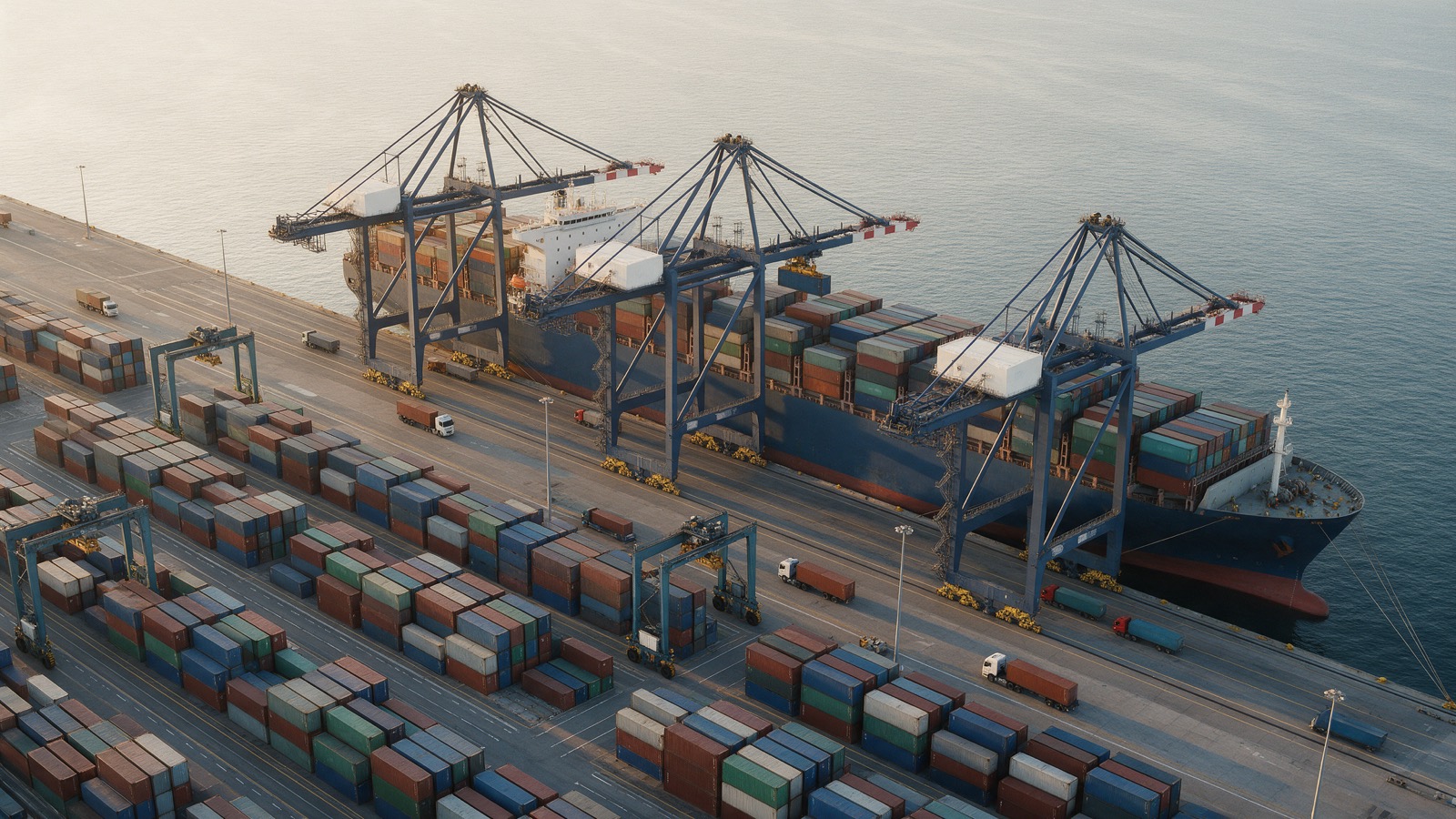
Gate, yard and quay on the same screen.
The plate at the gate, each truck's appointment, the queue and the time in the yard, the reefer plugs and the hot spot before the flame, with its video evidence.
At the gate · in action
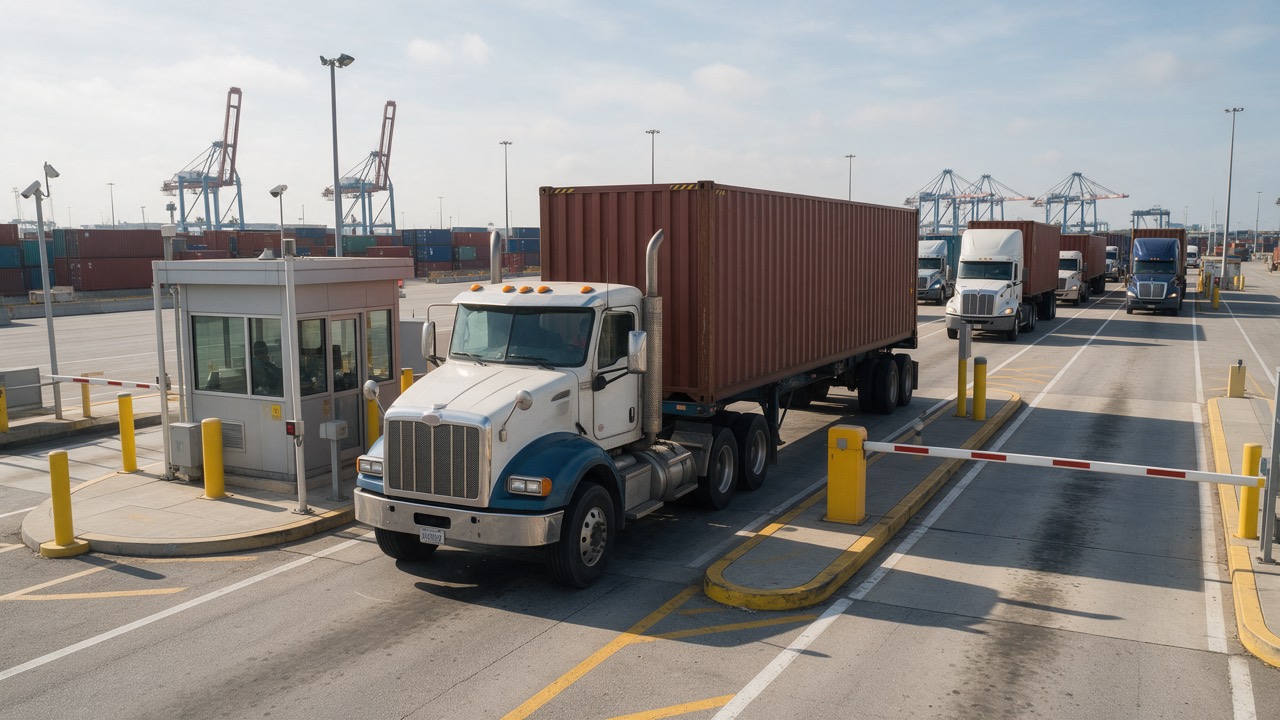
Every truck, from the barrier to the yard.
The plate-reading camera recognises the unit in the lane; Septem looks it up in the registry and in the day's appointments, puts it in the dock queue and records how long it stays inside.
 TruckXK-4721
- XK-4721 · AuthorizedVehicle authorized
- 10:40 appointment · arrived on timeRead by the camera
- In queueArrived 10:38 · waiting 6 min
- Entered through Gate 218 min inside
Reefers · in action
The plug that heats up, before it fails.
A radiometric thermal camera measures the eight points of each plug — contacts, connector, breaker, busbars, neutral and the three phases — against its template thresholds: warning at 60 °C and critical at 75 °C.
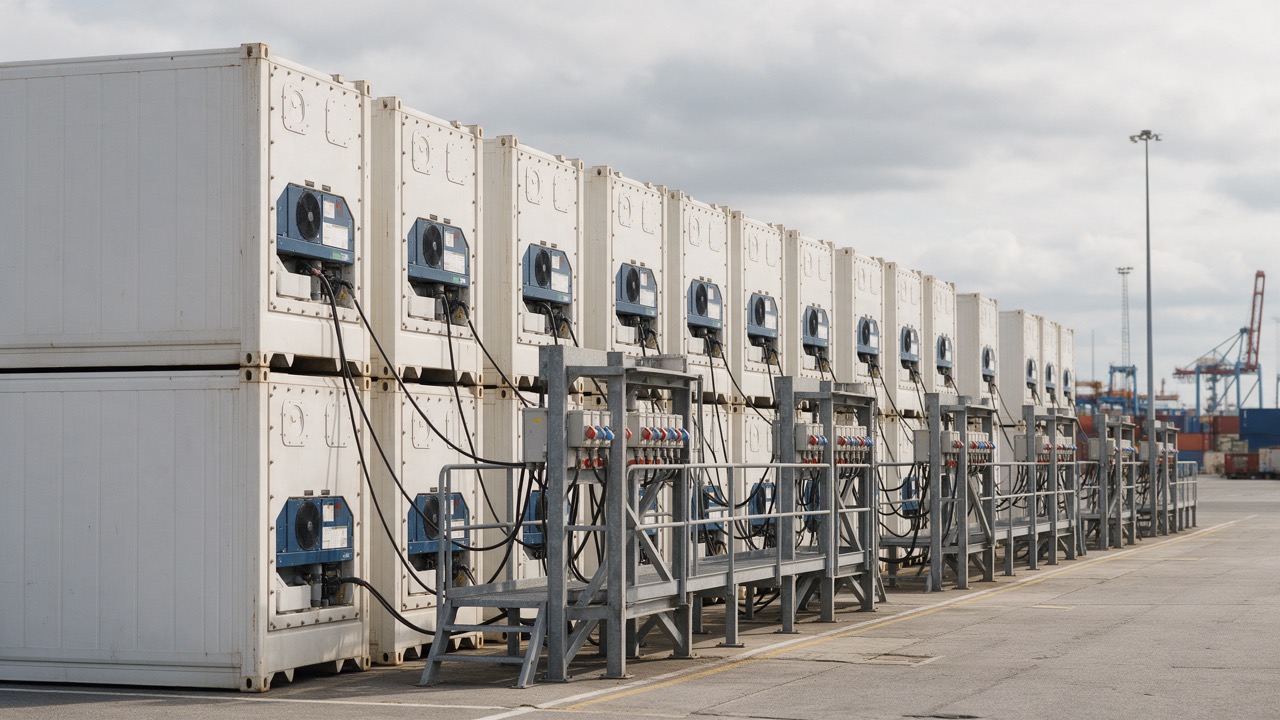
- 1 · Plug contacts41.6 °CNormalWarning 60 · Crit 75
- 2 · Container connector and cable63.8 °CWarningWarning 60 · Crit 75
- 6 · Plug phase R39.2 °CNormalWarning 60 · Crit 75
- 7 · Plug phase S40.1 °CNormalWarning 60 · Crit 75
Ready today
Works today in real installations.
- Plate readingAt gates, booths and checkpoints.
- Appointments and truck queueThe gate queue and each appointment's compliance.
- Routes and dwellSection speed and each unit's time in the yard.
- Access controlPeople, credentials and doors, with emergency lockdown.
- Reefer plugsTemperature of each connection by thermography, plug by plug.
- Early fire detectionYards, warehouses and tanks watched before the flame.
- Gas leaks with a cameraOptical gas cameras on tanks and pipelines.
Validated at your site
The code exists; we test it with your equipment before committing to it.
- Container codeReading the code by camera with its check digit.
- Damage inspectionA photo per side at the gate and in/out comparison.
- Port security (ISPS)Restricted zones, access and an audit log.
- Dangerous goodsLocation and monitoring of hazardous cargo.
- PTZ and radarThe PTZ points by itself at the radar's target.
- PPE by zoneHard hat and vest with an alarm per yard zone.
- People in zone and occupancyIntrusion, loitering and over-occupancy.
- Person next to a vehicleAlarm when someone is beside a moving truck.
- Cranes and quay equipmentThermography and vibration of motors, brakes and gearboxes.
- GPS trackingTractors and yard equipment.
Recommended hardware
What is enough, measured. What we have not measured, we say so.
Analytics run on the on-site server, at the plant. This table comes from dated measurements and the installer's rules; above what was measured, the equipment is sized by measuring at your site before committing to a number.
On-site server by camera count
| Cameras | Video | Analytics | Server | Status |
|---|---|---|---|---|
| 1 to 5 | 1080p · AI analyses the substream at 3 frames per second | Continuous recording + person and vehicle detection | 4 cores · 16 GB RAM · 100 GB for the system + the video disk | Measured: 2 cores were the limit for 5 cameras with AI |
| 1 to 5 | 4K without substream | Same | Enable the camera substream or add cores | Measured: with the 4K stream alone, 2 cores were not enough |
| 6 to 16 | 1080p | Detection, PPE and attribute search | SEPTEM Compact 16-AI: Intel N100/N150, 16 GB and an AI accelerator | Validated at your site |
| 17 or more | Any | Any | Sized with the test kit at your site | No published measurement |
Installer minimum: 8 GB RAM (it will not install with less) and 30 GB free. Recommended: 4 cores, 16 GB and 100 GB.
At the gate the plate camera runs at 6 frames/s: count it separately when sizing.
What each analytic costs
| Analytic | Model and input | Measured time per frame (CPU, no GPU) | Default rate |
|---|---|---|---|
| People and vehicles | Own detector · 640 × 640 | 385 to 465 ms, depending on hardware | 3 frames/s per camera, only when there is motion |
| Plate reading | Full frame 2560 × 1440 | 349 ms on 2 cores · 95.9 % exact plates over 121 frames | 6 frames/s on the plate camera |
| Attribute and text search | Visual fingerprint · 224 × 224 per crop | ≈ 490 ms per crop | Once per detected person or vehicle |
| PPE (hard hat and vest) | PPE detector · 640 × 640 | No published per-camera measurement | Every 8 s, up to 2 people per pass |
Disk per camera per day
| Resolution (H.265, 15 frames/s) | Continuous recording | Motion only |
|---|---|---|
| 1080p | ≈ 25 GB | ≈ 7 GB |
| 4 MP | ≈ 44 GB | ≈ 13 GB |
| 4K | ≈ 99 GB | ≈ 30 GB |
Estimate from the platform's storage planner (1100 kbps per megapixel in H.265). Measured in the lab: 14 cameras at 1080p H.264, 15 frames/s recorded 518 GB per day.
In both modes video, photos of people and analytics stay on the on-site server; the cloud computes nothing that depends on the number of cameras. In Hybrid Cloud the substream is uploaded only while someone is watching (0.5 to 2 Mbps per camera, a design value, not measured).
Recording and live video are never touched. With the CPU saturated, analytics drop to half the frames; if it continues, they pause; and after 5 minutes the console shows «insufficient hardware». Today on-site analytics run on CPU: there is no GPU acceleration, and the Compact's AI accelerator is validated at your site.
Illustrative footage generated for this page. The readings, thresholds, steps and status of each function are the ones the platform shows.
SEE. UNDERSTAND. ACT.
A demo with your cameras and your equipment, in your language. If we don't do something yet, we will tell you.